Latest Posts

Wandering, Sheltering, Connecting: Art and Nature

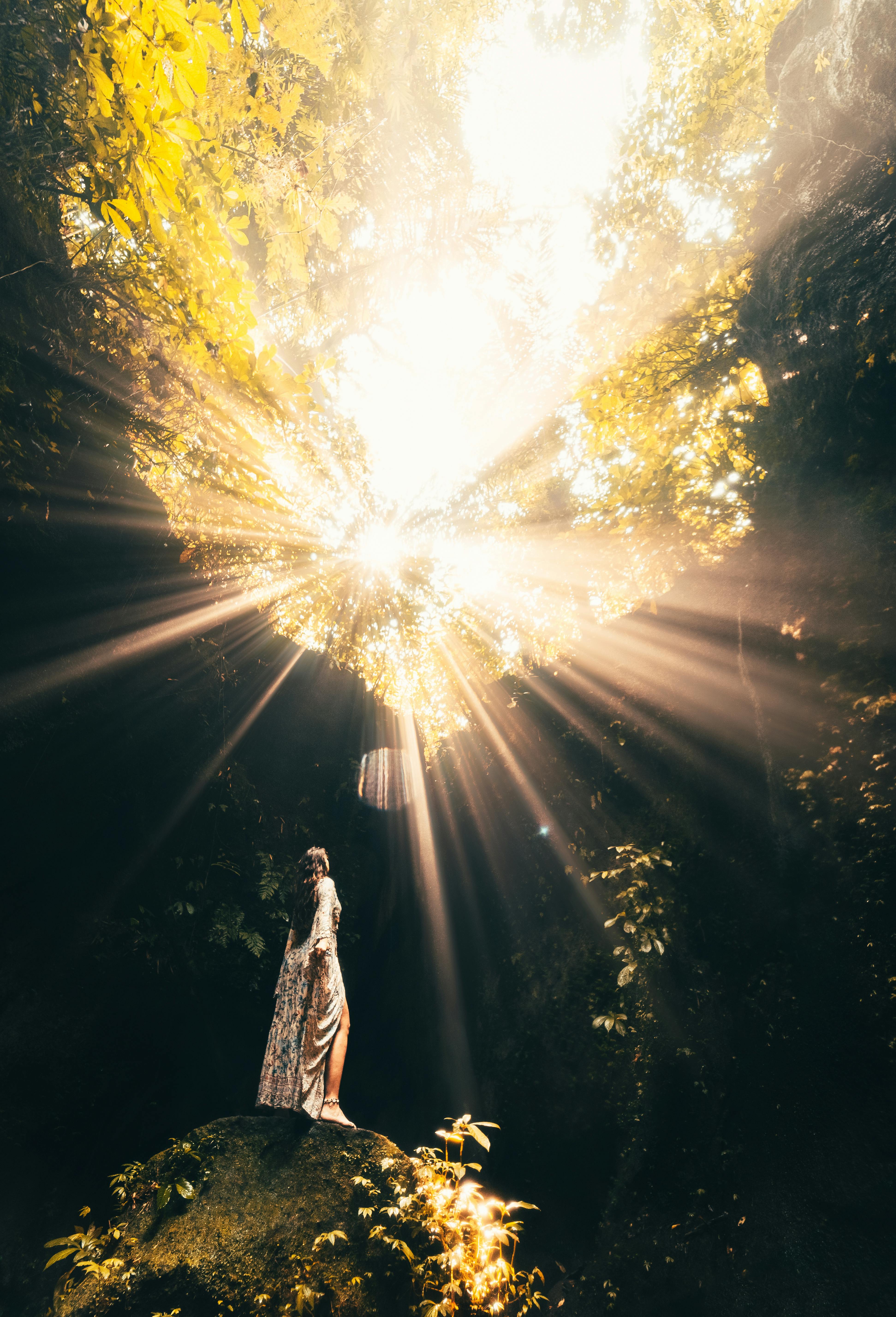
Balanced on sandstone high above

a powerful current in the forest,

the sense of a separate existence dissolves.

Bathing in awe, humbled and heartened,

oneness emerges.

Once while on a trail in the Chesapeake and Ohio Canal National Park, resting on a lookout, we heard and then saw a man climbing onto the path from the rocks below. He had been exploring off-path, was happily spent and yet keen to talk about his experience. Curious. I had never considered leaving the well-marked trail. “Aren’t you worried about getting lost?” I asked. He grinned. “Nah. I’m always right where I’m supposed to be. Can’t be lost, then — can I?” 

From this encounter and wilderness navigation books, I later gleaned that those who are rigidly focused on a destination may be less likely to notice changes in terrain, weather, or even their own physical condition. This makes them more vulnerable to getting lost or getting into trouble. Conversely, those who are wandering or exploring are more likely to be attuned to their surroundings and open to corrections and adaptations. Literally and metaphorically, true wanderers—those who embrace the journey without a fixed endpoint—seem to navigate with a more reliable, innate sense of direction.

As the wanderer explores physical landscapes, artists explore the landscapes of perception and meaning. There is an expanding and impressive array of artistic explorations that invite us to consider this connection, offering invaluable inspiration on how we can co-create new paths — or wander off-piste, confident that we are exactly where we are supposed to be — while respecting the ecosystems we find ourselves in.

Here are three upcoming art experiences to explore.

Caspar David Friedrich: The Soul of Nature

(The Metropolitan Museum of Art, New York, February 8 – May 11, 2025)

Two Men Contemplating the Moon by Caspar David Friedrich, ca 1825-1830

The Metropolitan Museum of Art will host a major retrospective of Caspar David Friedrich, the master of German Romantic landscape painting between 8 February and 11 May 2025. This exhibition offers a chance to reflect on the profound emotional connection humans have with nature as seen through the eyes of one of its most devoted interpreters.

A master of atmosphere, light, and symbolic composition, Friedrich “developed pictorial subjects and strategies that emphasize the individuality, intimacy, open-endedness, and complexity of our responses to the natural world.” (The Met) Known for evocative depictions of figures in nature, Friedrich’s paintings invite viewers to contemplate spiritual dimensions of the natural world. But within this invitation, a sense of melancholy often pervades. It is evident in the solitary figures in vast landscapes, skeletal trees reaching towards wintry skies, and crumbling ruins reflecting the interplay between human history and the forces of nature.

As a child outdoors in the winter, Friedrich fell into icy water. His younger sibling jumped in to save him – but then drowned. I imagine that later as an adult, Friedrich experienced tremendous sadness as well as solace in nature. Then after his wanderings, safe in his studio, he set about creating. 

And this is what I also find particularly compelling and comforting in Friedrich’s paintings: they hold the tension of grieving and sublimation, of a repository and infinity. Neuroaesthetic research has shown that viewing landscape paintings activates the parahippocampal place area (PPA), a region associated with spatial processing and scene recognition. This suggests that the brain is actively engaged in constructing a sense of space and relating to the environment; landscape paintings evoke a sense of being in the scene or evoke one’s own memories and feelings. Through his art, Caspar David Friedrich created space for feeling and processing grief.

Friedrich’s wanderers, immersed in the vastness of nature, find a kind of spiritual shelter, a place for spirit to commune with the soul. 

The Helsinki Biennial 2025 “Shelter: Below and Beyond, Becoming and Belonging”

(Vallisaari Island, Helsinki, Finland, 8 June to 21 September 2025)

The human experience is, of course, only part of a grander whole. Perceptions of humanity’s place within nature are evolving. The Helsinki Biennial 2025 on Vallisaari Island shifts or ‘nudges’ us away from human-centric perspectives to more broadly explore the theme of shelter.

How does it feel and how do we act when we conceive generously what shelter means for all living beings?

We may expect explorations of the multifaceted relationship between humans and their environment, considering the ways in which nature provides protection, solace, and a sense of belonging. But the curators are also interested in non-human actors “such as plants, animals, fungi, chemical elements, and minerals”. (Helsinki Biennial)

Given Vallisaari’s diverse ecosystems, from lush forests to rocky shorelines, the biennial may feature works that interact directly with the landscape. We imagine there may be installations nestled within the island, and soundscapes that harmonize or contrast with the natural sounds of the sea.

We might also expect to see works that address issues of displacement, migration, and the search for refuge.

As we explore how it feels to conceive of a “more-than-human-world”, an awareness of multi-sensory communication emerges, connecting us deeper to nature and each other.

Happiness is found in the simplest things – a campfire, a starry night sky, and good company.” – Snufkin (Töve Jansson)

The Shanghai Biennale 2025: Does the Flower Hear the Bee?

(The Power Station of Art, 8 November 2025 – 31 March 2026)

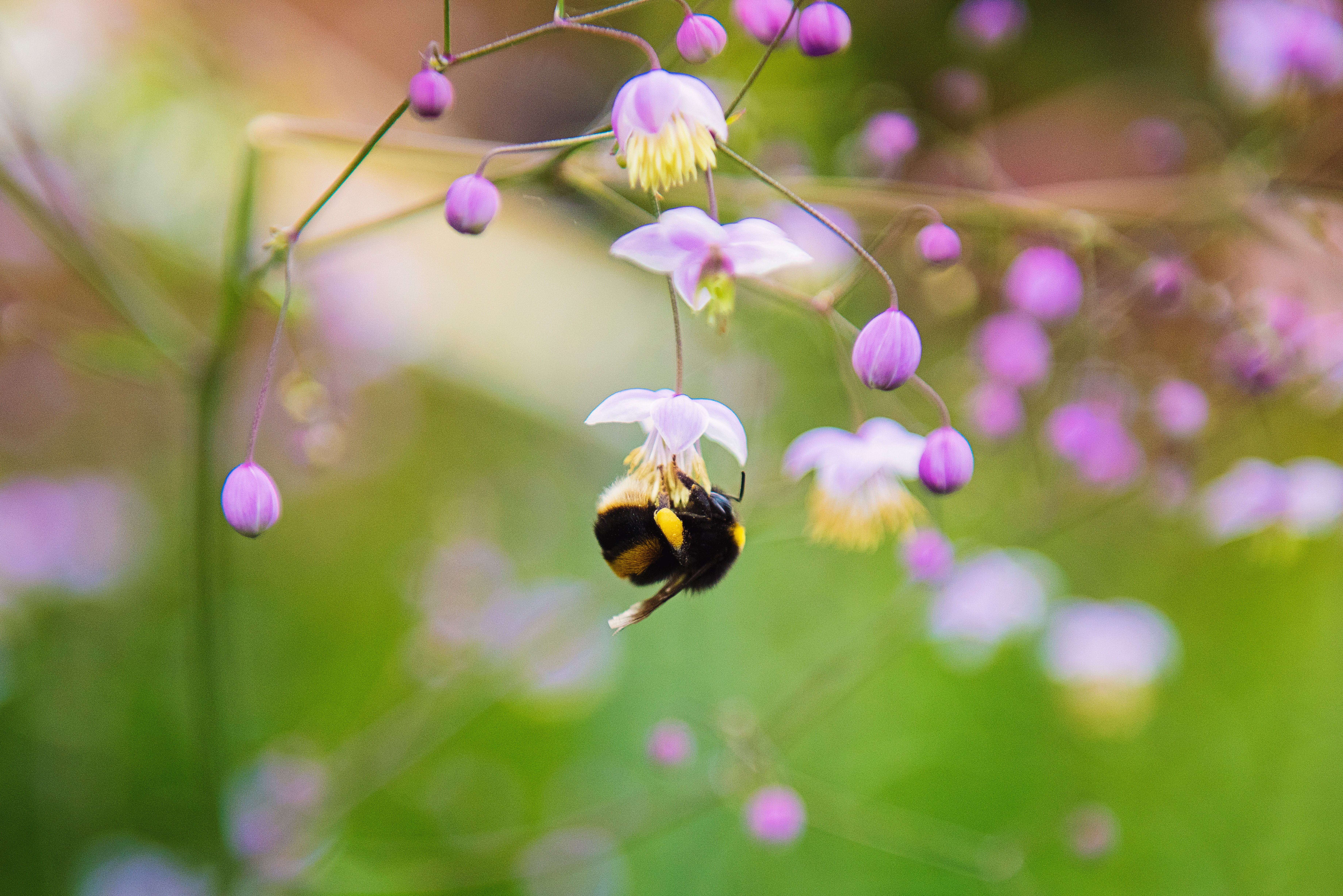
The Shanghai Biennale 2025 poses the intriguing question, “Does the Flower Hear the Bee?” The title suggests a focus on symbiosis and interdependency, and exploration of themes such as biodiversity and harmonious coexistence. 

“We have long known now that when bees gather, they communicate and share knowledge with each other. We are only just recognizing that this network of communication extends even further,” says Kitty Scott, Chief Curator. “It turns out that flowers too are gathering information, and we now appreciate that they ‘hear’ the vibration of honeybee wings, which causes them to secrete a sweeter nectar in their presence.” (Shanghai Biennale)

Just as flowers and bees rely on each other for pollination and sustenance, all living beings are part of a complex web of relationships.

We might anticipate works that utilize scientific research, data visualization, and new technologies to reveal the hidden connections within nature. Perhaps installations that translate the language of plants or explore the communication networks of fungi.

“Does the Flower Hear the Bee?” promises to be a thought-provoking exploration of the intricate and often invisible connections within the natural world.

These curated art experiences share a profound respect for nature, highlighting its capacity to inspire awe and facilitate transformation. The landscapes of Caspar David Friedrich, with their emotional depth, invite us to reflect on the natural world, from a romantic, human perspective. The Helsinki Biennial seeks to shift our human-centric perspective while exploring the concept of shelter. The Shanghai Biennale encourages a deeper appreciation of symbiosis and the eastern concept of Gongsheng, which is “based on the ontological assumption of a primordial connectivity and oneness of all forms of being.”

By juxtaposing these approaches, we experience a multifaceted exploration of humanity’s evolving place within nature. The exhibitions provide contemplative spaces where individuals can engage with the natural world in a manner that fosters reverence and introspection. They also serve as a sanctuary for emotional healing, allowing visitors to process grief and find solace. Moreover, they allow us to renew our connection with nature and find our place within the interconnectedness of all life.❂


The writer does not work for, consult, own shares in, or receive funding from any company or organization mentioned in this article.


References

250 Years of Caspar David Friedrich

The Metropolitan Museum of Art – Caspar David Friedrich Exhibition 2025

“Caspar David Friedrich – Towards the Infinite” (Die Entdeckung der Unendlichkeit). ARTE documentary film, https://www.arte.tv/en/videos/112225-000-A/caspar-david-friedrich/.

Epstein R, Harris A, Stanley D, Kanwisher N. The parahippocampal place area: recognition, navigation, or encoding? Neuron. 1999 May;23(1):115-25. doi: 10.1016/s0896-6273(00)80758-8. PMID: 10402198. 

Kawabata, H., & Zeki, S. (2004). Neural correlates of beauty. Journal of Neurophysiology, 91(4), 1699–1705.

Helsinki Biennial 2025 (Vallisaari Island, Esplanadi Park, and HAM Helsinki Art Museum)

Power Station of Art

Announcement – Chief Curator Kitty Scott – Shanghai Biennale 2025

Song, Bing, and Yiwen Zhan, eds. Gongsheng Across Contexts. Singapore: Springer Nature Singapore, 2023.


Feature Photo by Stijn Dijkstra

Additional photos by Arnaud Audoin, Achini Kobbakaduwa, Jeremy Bishop, Kammeran Gonzalez-Keola, M Venter, Tomáš Malík


Berlin to Copenhagen

Between a cozy Kneipe in Berlin and a hyggelig hotel lounge in Copenhagen, a seasoned cyclist travels along the Berlin to Copenhagen Bicycle Route, completing the journey in under a week.

We may not all strive to be seasoned cyclists, but if you appreciate European capitals and cultural experiences; love national parks and being in nature; resonate with environmentally friendly vacations and exploring something new: here’s your sign.

As post-pandemic travel surged, so have accounts of the escalating costs, declining quality, long lines and delays, and misadventures at airports and aboard cramped flights. The phrase “travel isn’t fun anymore” has become like a punctuation mark at the end of dispiriting narratives.

To reclaim the vitality of traveling, let us reclaim the journey itself. It is not only about a destination; it is also the way that we lean into: the places we travel through, mindful and flexible, at a human pace — and the people, nature, and cultural expressions we observe and interact with along the way.

It is about what emerges from within — when given the space — and weaves together with what is out there. The essence is in the transformative power of human-scale activities. While that kind of long-distance travel has existed for ages, it has attracted a devoted and venturesome set. 

Long-distance bicycle routes

We think of sinewy, ultra-fit cyclists – often in colorful clusters with a professional or semi-pro air about them.

We see them on the road – curved over handlebars, working hard, as we slow down and maneuver around them in cars.

Long-distance routes have been their domain.

But encouragingly, more of us are being welcomed to this sphere–to remedy an over-reliance on cars and to share in the wellbeing benefits of cycling. Journeys such as the Berlin to Copenhagen Bicycle Route are opening up to a wider range of individuals, of various ages and fitness levels.

How long-distance bicycle routes are becoming more welcoming

One of the key factors contributing to this accessibility is the rise of pedal electric cycles (pedelecs), as well as the more powerful S-pedelecs and other e-bikes. For many newcomers to these routes, renting an e-bike for a one-way trip and combining cycling with train travel can make the journey feasible and allow for a more leisurely pace. Adaptive bicycles are also allowing individuals with disabilities or reduced mobility to participate. These bicycles, along with the necessary charging stations, parts, and equipment are improving in availability, affordability, and safety. More of us can now embark on long-distance cycling routes.

Apps such as Komoot and Windfinder provide route maps, real-time weather reports, and other essential information to facilitate the planning and navigation of cycling trips.

Details to design an itinerary can be found on the official Bike-Berlin-Copenhagen website. Accommodations also can be researched and booked through Bed and Bike.

More support is on the way

The European Commission recently adopted a proposal on 4 October 2023 for a European Declaration on Cycling. This declaration focuses on “significantly increasing safe and coherent cycling infrastructure across Europe”.

There is also an expressed commitment to “connectivity within and between rural and urban areas, especially…to create multimodal mobility services”. 

Beyond infrastructure, there are programs to provide technical support and fund initiatives that encourage more individuals to choose cycling as a sustainable mode of transportation.

The Berlin to Copenhagen Bicycle Route connects two must-experience European capitals and is comprised of a land journey and a two-hour ferry crossing of the Baltic Sea. The route (about 640 kilometers / 400 miles) is well-marked, with mostly paved, dedicated bike paths.

Highlights along the route include Lake Stechlin, Müritz National Park, Stevns Klint, the white cliffs of the Island of Møn, and the Museum of Contemporary Art in Ishøj.

For those looking ahead and considering a long-term investment, a holiday home along the route offers the opportunity to access the bicycle route at one’s convenience as well as to accommodate guests.

The first stop from the German capital on the Berlin—Copenhagen Bicycle Route — located 24 kilometers (15 miles) from the Brandenburg Gate — is the town of Hennigsdorf.

achterspring

The achterspring vacation condominium project in Hennigsdorf is located near the town’s marina, where one can enjoy refreshments and leisure activities, and near bike paths, including the Berlin—Copenhagen Bicycle Route.

The three-story complex is being developed and constructed in accordance with the green building standards of the German Sustainable Building Council (DGNB).

In addition to being situated along the Berlin—Copenhagen Bicycle Route, the achterspring vacation condos will offer picturesque views of the water and nearby marina, with the added option of boat moorings for condo owners.

A pathway and transition into a new lifestyle

Cycling, cycling holidays, and human-scale living: these offer opportunities to shift into a simpler, more sustainable lifestyle. Making these lifestyle choices can bring about a profound transformation, allowing us to connect more deeply with nature and enhance the collective environmental consciousness. Remember, something new often comes from something new.


DIFOG mbH and the writer of this post consult on the achterspring condominium project, and promote regenerative design and sustainability in holiday homes.

References

European Commission proposes list of principles to boost cycling across Europe (4 October 2023)

Bike Way Berlin-Copenhagen – information about the route from Dansk Cykelturisme, Tourismusverband Mecklenburg-Vorpommern e.V., and Tourismusverband Ruppiner Seenland e.V. — including helpful information about alternative transport options for the route

Arken Museum of Contemporary Art in Ishøj, Denmark

One Way Bike Tours – to rent a bicycle in Berlin or Copenhagen for a one-way trip

Bed and Bike – cyclist-friendly accommodation options along the route

Komoot – app for planning cycling and hiking routes (and also the premium multi-day planner)

Windfinder – app for wind and weather forecasts, maps, and real time weather reports

DGNB – the German Sustainable Building Council

achterspring – condominium project in Hennigsdorf, Germany


Feature photo by Serg Alesenko

Other photos by: alexandre saraiva carniato, Arthur Yuzkiv, Elia, Julia Volk, Luca Barth, Naro K, Pixabay, Samuel Vogl, Shrinish Donde, Team EVELO; Berlin to Copenhagen signs: Radweg Berlin – Kopenhagen Wegweiser: Ch.Pagenkopf, CC BY-SA 3.0 and Jumbo1435, CC BY-SA 2.5


Beach Holiday in Germany

Germany’s fantastic beaches are little-known wonders outside of the country. A friend who grew up in a town on the North Sea coast tells me that many Germans used to fly to Mallorca or mainland Spain, southern France, Italy, the Greek islands, or Turkey for their beach holidays, but in recent years northern European beach towns have been receiving more attention from vacationers. With intense heat waves and wildfires in southern Europe, and expanding environmental consciousness overall, more people have been choosing to travel closer to home — to beaches in Germany and Scandinavia. “My hometown is getting more visitors in the summers now. It’s definitely becoming more popular,” she remarks.

These coastal towns and beaches are attractive and serene — ideal for relaxing and energizing holidays. It makes you wonder why they haven’t developed the renown of other beaches in modern times, despite all their natural beauty and charm. “Maybe we’re not as good at marketing,” my friend suggests.

There is the marketing issue in some places, to be sure. Some beaches and resorts lean on comparisons to other places: Föhr is described as the “Frisian Caribbean”, Heiligendamm on the Baltic Sea coast welcomes visitors to the “German Hamptons”, the island of Sylt is like “Martha’s Vineyard — but more beautiful”. And while there may be nuggets of truth in these comparisons, the reality is that the beaches and seaside towns in Germany have their own unique combination of setting, character, and vibe. For real access, we should prefer other analogies, rooted in the ambience of German beaches.


Things that are also places that give us an experience:

Behold the German beach chair — der Strandkorb.

More than a chair, it was engineered for humans in harmony with local nature. These distinctive wicker-canvas-wood pieces of furniture have hoods that shield you from strong winds and swirling sands, while still allowing all the healthy negative ions in the sea air to be deeply breathed in. The chair can have a footrest and other features, but the basic model was simply designed for protection and reinvigoration. Tucked away in your private German beach chair, you are in a place within a place. You’re getting your strength back.


Things that are also experiences that give us a sense of place:

Some things are also experiences that give us a sense of place. For example, a scrupulously-designed regional crime novel – the Regiokrimi.

According to Thomas Kniesche, a professor of German studies at Brown University, there are more than 3,000 crime novels published in Germany every year. And just as the immensely popular TV series Tatort has continued to thrive filming episodes in various regions of the country — the most popular literary sub-genre in Germany is the regional crime novel. 

This speaks to ongoing shadow work and meaning-making. Doing one’s own shadow work instead of projecting onto other people can be demanding and challenging; it is not for the faint of heart. It is honest work, and honestly work — from which one might need to take a break sometimes — to relax and project shadow safely in art and literature.

For the ambience of northern Germany, there are notably the novels* of Eva Almstädt, Anna Johannsen, and Klaus-Peter Wolf to dive into during a summer beach holiday – safe and sound in a Strandkorb, naturally.


The coastline of Germany stretches from the North Sea near Denmark to the Baltic Sea, for more than 2,250 kilometers (1,400 miles). In addition to sandy beaches, resorts, and seaside towns, there are also many islands close to the coastline. Here are some recommended destinations for a beach holiday in Germany.

Warnemünde

(Baltic Sea)

The town of Warnemünde and its beach are only about two and a half hours by car from Berlin. It is reportedly here that the Strandkorb got its start, in the late 19th century. The long white-sand beach gets lively in the high season. There is also a promenade, a light house, and the historic town center to explore. Amber, a yellow-orange fossilized resin, is found on the southern shores of the Baltic Sea and has been used in jewelry since ancient times; there are a number of small shops that sell beautiful amber pieces. The Marina Ostsee harbor nearby offers yacht berths and charters, sailing, surfing, and a diving school. 

Also highly recommended for a focus on spacious nature and art: about an hour northeast of Warnemünde is the delightful, art-infused Ahrenshoop. The 13-kilometer (8-mile) long beach Weststrand, and the 5-kilometer (approx. 3-mile) long white-sand beach Nordstrand Prerow (and a beautiful dog-friendly beach, too) are also on the stretch of landscape known as Fischland-Darß-Zingst.

Usedom

(Baltic Sea)

Usedom — the “Sunny Island” — has a 42-kilometer (26-mile) stretch of sandy beaches along its northern coast, with a trio of elegant seaside towns: Ahlbeck, Heringsdorf, and Bansin — which are also connected with a grand promenade. There are many interesting buildings, hotels and villas in the Bäderarchitektur style to admire while on a stroll — hearkening back to the imperial-era seaside resort towns and wellness culture.

Rügen

(Baltic Sea)

Germany’s largest island Rügen is connected by bridge to the mainland, and it is also where the Deutsche Alleenstraße (German Boulevard) starts. This route is about 2,900 kilometers (1,800 miles) long, with “tunnels” formed by tree branches overhead; it connects east and west — and winds through the country, finally reaching Lake Constance, known in Germany as Bodensee.

The sandy sea shores on the island stretch for 61 kilometers (38 miles), where you will find the charming seaside towns of Binz and Sellin. The Strandkörbe (beach chairs) have their place on the golden-hued beaches here — while the Königsstuhl, (King’s Chair) is on the white chalk cliffs nearby, in the Jasmund National Park.

Chalk Cliffs at Rügen (1818-1819) by Caspar David Friedrich

Also highly recommended: Hiddensee, known as the “island behind the island”, which can be accessed by ferry from the town of Schaprode on Rügen. Automobiles have to be left behind in a parking lot in Schaprode; Hiddensee is blissfully auto-free. When the last ferry of the day leaves the island, Hiddensee shifts to an exceptionally peaceful and slow-paced feel.

And if that sounds ideal, other recommended auto-free German islands that offer a more secluded nature and wellness-focused experience include the East Frisian islands of Juist and Langeoog in the Wattenmeer zone of the North Sea.

Sylt

(North Sea)

The largest North Frisian island, Sylt is situated near Denmark and has about 40 kilometers (25 miles) of sandy beaches. You can design your stay on Sylt so that it feels like a serene and secluded retreat from the world – perhaps choosing to stay in a traditional thatched-roof cottage or at a quiet, subtle upscale spa resort in the town of Keitum. But then there’s also the splashy Sylt, the flashy ostentatious side of Sylt; the beachside bars and nightlife, upscale shopping, superb seafood, fine dining. 

Also highly recommended, near Sylt in the North Sea: the quiet and beautiful beaches with a nature reserve and otherworldly dune landscape on the island of Amrum.

⚓️

So, which beach is the most beautiful? Of course that designation is in the eye of the beholder. With an approach that seeks to tune into an authentic ambience, our experiences can have more context and meaning. And that makes for a beach holiday to enjoy and cherish.❂


The writer does not work for, consult, own shares in, or receive funding from any company or organization mentioned in this article.


References

Feature photo from Heiligendamm seaside resort, Bad Doberan by M.J. Heinrich

Deutsche Alleenstraße (German Boulevard, Rügen to Bodensee route)

Photograph of Strandkörbe by LaRusso, Hamburg-based music producer Mark Brückner

Thomas Kniesche, “Germany’s Love Affair with Crime Fiction,” – Foreign Policy, October 2021.

*German Krimi authors and regional crime novels: 

  • Eva Almstädt | Start with Kalter Grund (2004), the first book in her Pia Korittki series — or Am dunklen Wasser (2022), the first book of the Akte Nordsee series.
  • Anna Johannsen | Perhaps start with: Der Tote im Strandkorb (2017), the first book in her series, Die Inselkommissarin-Reihe — or her book: Hinter der Dunkleheit (2022), which started a new series.
  • Klaus-Peter Wolf | Start with Ostfriesenkiller (2007), his first book in the series, Ann Kathrin Klaasen-Reihe.

Chalk Cliffs at Rügen, (Kreidefelsen auf Rügen) oil on canvas by Caspar David Friedrich (1818-1819). Original painting at the Kunst Museum Winterthur Reinhart am Stadtgarten, Zürich. Exhibition in 2023Caspar David Friedrich und die Vorboten der Romantik (26 August – 19 November 2023).


Marienbad

I am in the garden, reading Biomimicry: Innovation Inspired by Nature by Janine Benyus. Biomimicry is about observing nature’s strategies to come up with advanced solutions for human challenges such as food spoilage and shortages, harmful chemicals, and water scarcity.

Landing on the opening quote from Václav Havel, I sense synchronicity, here in the Czech Republic.

We must draw our standards from the natural world. We must honor with the humility of the wise the bounds of that natural world and the mystery which lies beyond them, admitting that there is something in the order of being which evidently exceeds all our competence.

Václav Havel

There is a soft murmuring of water from a fountain behind me and a rippling pool in front, as the swimmers float gently from side to side. I settle deeper into the lounge, adjust the sand-colored shade above the chair and continue reading.

A honeybee with the unmistakable aura of purpose arrives.

He lands on the top edge of the book, so close that I can observe his stubbly knees. Literally, the bee’s knees. He is focused on the spaces between the pages and seems to not even notice me. I hold the book still, my gaze moving from the words on the page to the movement of the bee above. The bee heaves into the pages then rises up to pause. Curious. And this repeats, again and again. I imagine that perhaps the previous owner of this second-hand book imbued it with some invisible sweetness. At last, he comes to his full senses and takes off into a vertical flight path. I follow him with my gaze until his black and gold body evanesces from my field of vision. I continue reading until I reach this point:

“The changes we make now, no matter how incremental they seem, may be the nucleus for this new reality. When we emerge from the fog, my hope is that we’ll have turned this juggernaut around, and instead of fleeing the Earth, we’ll be homeward bound, letting nature lead us to our landing, as the orchid leads the bee.”

Benyus

Marienbad is a historic European spa town, known as Mariánské Lázne in Czech. Situated in a geological basin, the marshy valley’s curative thermal springs have been a draw for centuries. And not just a few — there are 140 mineral-rich springs in the town and the surrounding area. In the 1780s a humble spa house with four baths beside the “Maria Spring” gave the town its name. Marienbad’s reputation grew steadily, and the town gained its official public bath status in 1818.

Artists from various disciplines have been drawn to Marienbad, finding solace and rejuvenation in the landscape, waters, and cultural atmosphere. And the name of the town has worked its way into the arts.

Take for example L’Année dernière à Marienbad (Last Year at Marienbad) directed by Alain Resnais, which won the 1961 Golden Lion at the Venice International Film Festival. The film, with its ambiguities and repetitions will render you studious and somnambulant — entering a liminal space.

Did the man and woman meet last year or not? And was it Marienbad — or not? It may have been, it’s not certain. But the film itself was actually made in palaces and lodges in and around Munich. Nonetheless, Marienbad offers itself up to such a dreamy composition and juxtapositions — reflecting the highly sophisticated Bohemian spa town of the Belle Époque with all of its intellectual and cultural influences — and the primeval, mud-oozing, rolling, rough and gorgeous forest-dwellings of hunter-gatherers.

My mind wanders to the heyday of the spa town, in the 1870s. I imagine an elderly woman out for her daily walk…

It was originally called the Hotel Casino. Later it became the Grand Spa Hotel and is now also known as the Falkensteiner Spa Resort-Marienbad, after the Austrian consortium that restored the building and added new structures.

The hotel has its own mineral water source, the Alexandra Spring. If you are new to drinking mineral waters at a spa town, or even if you have experience elsewhere but Marienbad is new for you – it is important to consult with a medical doctor to make sure that you are drinking the right amount and from the correct springs for your constitution. At hotels or in shops around town you can purchase a specially-designed cup with a spout that invites sipping.

It is also possible to bathe in the Alexandra Spring water in the spa, which is said to promote relaxation, lower blood pressure, and improve blood circulation. The moor mud bath, fango bath with essential oils, fango pack with colloidal silver and dry CO2  bath are other specialties.

I combine the following treatments to superb effect: the Alexandra spring water bath, partial fango pack (heated pad with mud peloid), and then a massage. Another powerful combination: the moor mud bath and a yin yoga class. Regenerative.


To a Marsh Hawk in Spring

There is health in thy gray wing, 

Health of nature’s furnishing. 

Say, thou modern-winged antique, 

Was thy mistress ever sick? 

In each heaving of thy wing 

Thou dost health and leisure bring, 

Thou dost waive disease and pain 

And resume new life again. 

Thoreau

The spectrum of curative sources in Marienbad is also compelling. Some of the conditions that are treated are cardiovascular diseases, problems with limbs, digestion, and metabolism, and respiratory difficulties.

One of our favorite places in the hotel is the spacious library. We ensconce ourselves at tea time and after dinner with our spaniel. I find myself thinking about the visual symbols, elements, and materials in this Bohemian spa town. 

Marsh, wetlands, peat, and salt. Ore and stone. Forest and wood. Basin, fountain, and water.

The honeybee.❂


The writer does not work for, consult, own shares in, or receive funding from any company or organization mentioned in this article.

The information, materials, and content in this post and on this website are for general educational purposes only and not intended to provide specific advice or to serve as a substitute for professional medical consultations, diagnosis, or treatment. Always seek the advice of your physician or other qualified healthcare practitioners before undertaking any diet, supplement, fitness routine or other health and wellness program


References

Benyus, Janine. Biomimicry: Innovation Inspired by Nature. HarperCollins, 1997.

Václav Havel – https://www.vaclavhavel.cz/en/

L’Année dernière à Marienbad (Last Year at Marienbad). Directed by Alain Resnais from a screenplay by Alain Robbe-Grillet, 1961.

Thoreau, Henry David. Walden, or Life in the Woods. Ticknor and Fields, 1854.

Marienbader Elegie“. Johann Wolfgang von Goethe, 1823


Details

Accommodations: Falkensteiner Spa Resort-Marienbad

Mariánské Lázně – Information Centre


Feature photo by Kat Smith

Additional photos by David Hablützel, Kapu Ravindranath, and M.J. Heinrich


Three Books and an Emerging, Ancient Field

“It is something to be able to paint a particular picture, or to carve a statue, and so to make a few objects beautiful; but it is far more glorious to carve and paint the very atmosphere and medium through which we look, which morally we can do. To affect the quality of the day, that is the highest of arts.”

Henry David Thoreau, Walden

Three Books and an Emerging, Ancient Field

In light of recent developments in artificial intelligence — acknowledging that computer programs can now create art, music, and literature — it is comforting and invigorating to center ourselves in the essence of our humanity, which reaches far deeper than the creation of things...

Book 1

Biophilia is the work of evolutionary biologist E.O. Wilson, published in 1984, in which he posited “that our natural affinity for life—biophilia—is the very essence of our humanity and binds us to all other living species.”(1)

Book 2 

Building on the biophilia hypothesis, social ecology professor Stephen Kellert wrote Building for Life: Designing and Understanding the Human-Nature Connection among other works, and “pioneered the concept of biophilic design, an emerging field that promotes improved health and wellbeing by creating connections between people and nature in the built environment.”(2)

Book 3 

In Creating Biophilic Buildings, author Amanda Sturgeon presents case studies of buildings designed recently with biophilic elements and attributes. But, as Sturgeon reminds us, “it is not a new practice.” (3)

While some may describe biophilic design as an emerging field in the 21st century, biophilic principles have been utilized for millennia. In a sense, we are emerging now from the dark ages of built environments into a renaissance through biophilic design, which both requires and delivers verve and vitality. It is a virtuous cycle, which turns as most do: on life-affirming choices, habits, coherency, generosity. 

Kellert’s framework of “Biophilic Design Elements and Attributes” referenced by Sturgeon, is a coherent, generous list from which we can make choices and set healthier patterns and programs in motion. There are many polished pieces, ready to set into place, but let us remember that there are also treasures to be (re)discovered. With that thought in mind, one case study that resonates strongly in Creating Biophilic Buildings is the David & Lucile Packard Foundation office in northern California – as it expresses one of the “lesser known” design elements and attributes: age, change, and the patina of time.

Age, Change, and the Patina of Time (Natural Patterns + Processes)

Natural materials used for the building include stone, copper, glass, and wood (specifically, Western red cedar and Douglas-fir from Oregon), and, as Sturgeon spells it out, “the building exterior, too, will mark the passage of time, as the copper develops a pleasing patina and the Western red cedar siding weathers.” 

This description along with the visuals provided brings up vividly: the atmosphere of the Pacific Northwest forests, being barefoot outdoors, the first time I heard the term patina (when getting married, in reference to how wedding rings change subtly over the years, faithfully etched with subtle impressions from an individual’s life), and thoughts about who may reflect on the patina of objects and built environments — imbued with love and respect — hundreds of years from now. 

So shall we make space for the patina of time to inspire the places we make.

With biophilic design, we align to affect the quality of the built environment, and the quality of the day.❀

References

(1) Harvard University Press | Wilson, E.O. Biophilia, Cambridge, MA.: Harvard University Press, 1984

(2) Remembering Stephen Kellert

(3) Sturgeon, Amanda. Creating Biophilic Buildings, Seattle, WA.: Ecotone Publishing, 2017

Feature photo by Jacob Colvin
Biome sweet biome

Where do you live? 

If you were asked this question while away from home, you probably would mention your city or state. If abroad, you would likely mention your nationality or the country in which you live. If you encounter someone from your own city or town, you might talk about your neighborhood, your Kiez or quartier — maybe even your street or building.

Where do you really live?

Something has been missing from the framework: a piece that references our interconnection with nature. Your biome. If you do not know about your biome, you are not alone. We could all improve our ecoliteracy.

Ecoliteracy“knowledge of the environment necessary for informed decision-making”.

Biome – “a community of plants and animals living together in a certain kind of climate”, also known as a bioclimatic landscape.

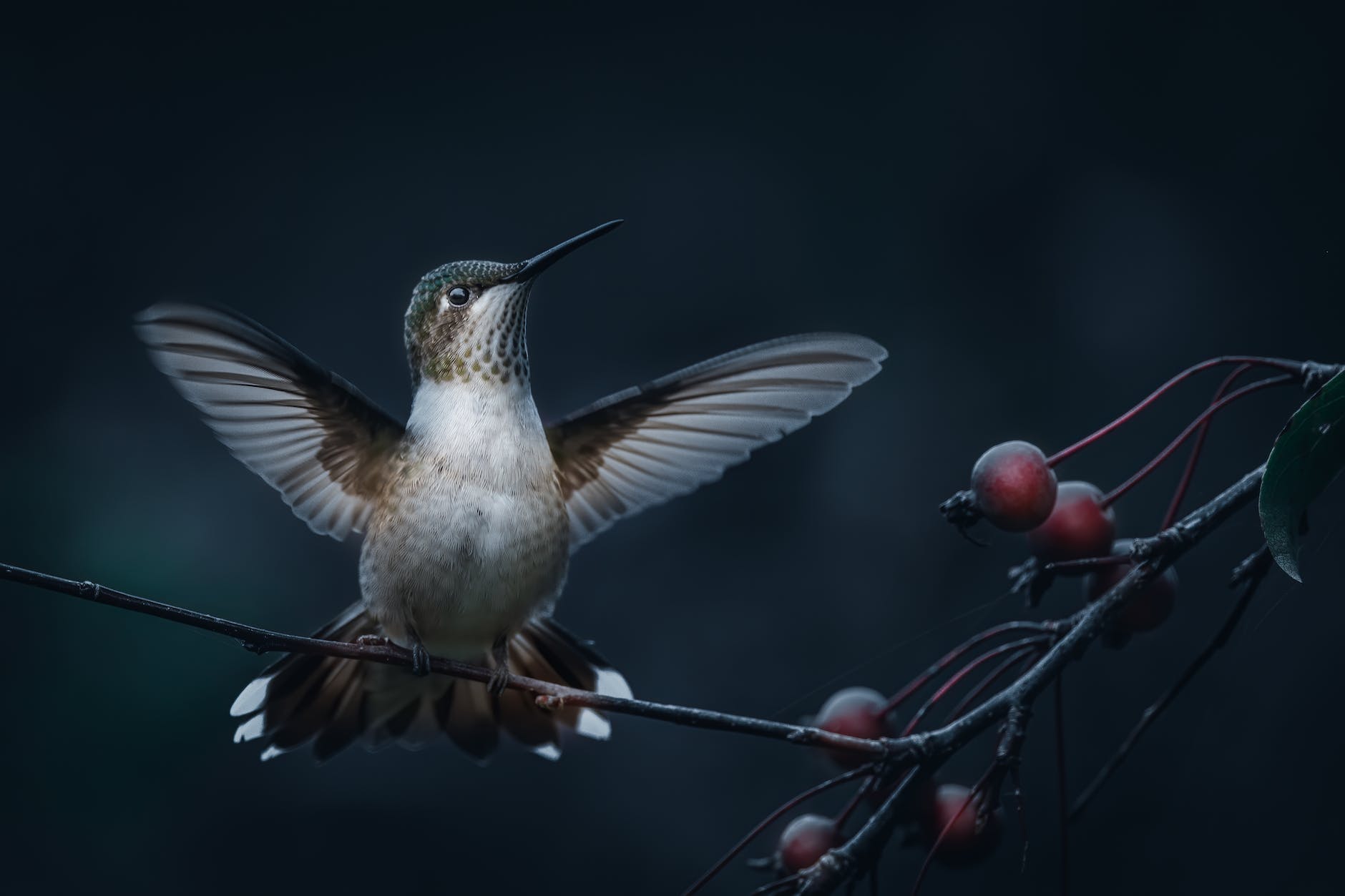
Do you share yours with foxes, bison, wolves, hedgehogs, otters, wrens, spruce, beech trees? Black bears, raccoons, great horned owls, quaking aspens? Water buffalo, i’iwi, geckos, monkey beetles, snow leopards, bridled nail-tail wallabies, tortoises, Atlantic puffins, monarch butterflies, pine oaks?

There are countless ways we can play a role in protecting our environments; instead of allowing grim dystopian narratives to impose a sort of psychic paralysis vis-à-vis daunting global environmental challenges — we can get our ecoliteracy up to speed, and choose to perceive differently and act locally.

Knowing the details about our biomes and ecosystems allows us to envision specific conservation goals – in the context of our communities, moving past the disheartening discord of climate crisis news reports — moving into local, immediate, and sustainable engagement.

What are current threats to your region’s habitats? What are priority conservation actions where you live? These are essential for getting aligned correctly as individuals and making better decisions.

People and societies must change behaviorally in leaps and bounds in response to complex climate crises, but first we require subtle, mentality-shifting frameworks, holistic approaches and habits in order to do so.

Perhaps now we can imagine ourselves in a new light as we access new layers of meaning in our biomes. As professor and author Karen Bakker recently noted in The Guardian: “with the help of artificial intelligence (AI), researchers are now decoding complex communication in other species.”

In the article, Bakker cites various research, sharing revelations that “bats remember favors and hold grudges, mother bats babble to their babies in ‘motherese’ in a manner similar to humans, flowers flood themselves with nectar in response to the buzz of bees, and sea turtles make more than 200 distinct sounds, [such as the sounds they make] while still in their eggs, before they hatch, to coordinate the moment of their birth.”

Imagine really understanding, and even communicating with the plants and animals in your biome. Sounds like the birth of new communities. Stay tuned.❂


References:

Bakker, K. (2022) The Sounds of Life: How Digital Technology is Bringing Us Closer to the Worlds of Animals and Plants. Princeton University Press

Ecoregions 2017 © Resolve – Find out about your biome and ecoregion and explore further.

McBride, B. B., C. A. Brewer, A. R. Berkowitz, and W. T. Borrie. 2013. Environmental literacy, ecological literacy, ecoliteracy: What do we mean and how did we get here? Ecosphere 4(5):67. http://dx.doi.org/10.1890/ES13-00075.1

One Earth – Bioregions 2020 navigator

Feature photo by Skyler Ewing