All posts filed under: Art, Design & Architecture

art, design and architecture

Wandering, Sheltering, Connecting: Art and Nature

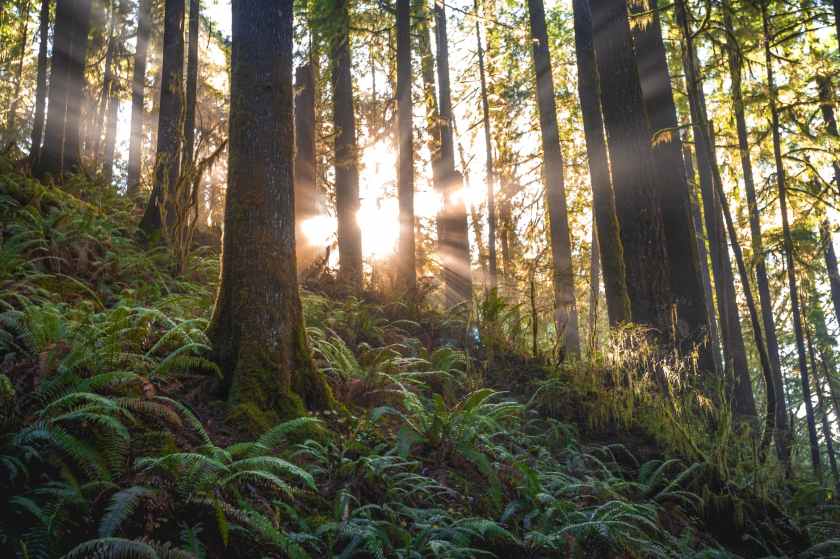
Balanced on sandstone high above a powerful current in the forest, the sense of a separate existence dissolves. Bathing in awe, humbled and heartened, oneness emerges. ❂ Once while on a trail in the Chesapeake and Ohio Canal National Park, resting on a lookout, we heard and then saw a man climbing onto the path from the rocks below. He had been exploring off-path, was happily spent and yet keen to talk about his experience. Curious. I had never considered leaving the well-marked trail. “Aren’t you worried about getting lost?” I asked. He grinned. “Nah. I’m always right where I’m supposed to be. Can’t be lost, then — can I?”  From this encounter and wilderness navigation books, I later gleaned that those who are rigidly focused on a destination may be less likely to notice changes in terrain, weather, or even their own physical condition. This makes them more vulnerable to getting lost or getting into trouble. Conversely, those who are wandering or exploring are more likely to be attuned to their surroundings and open …

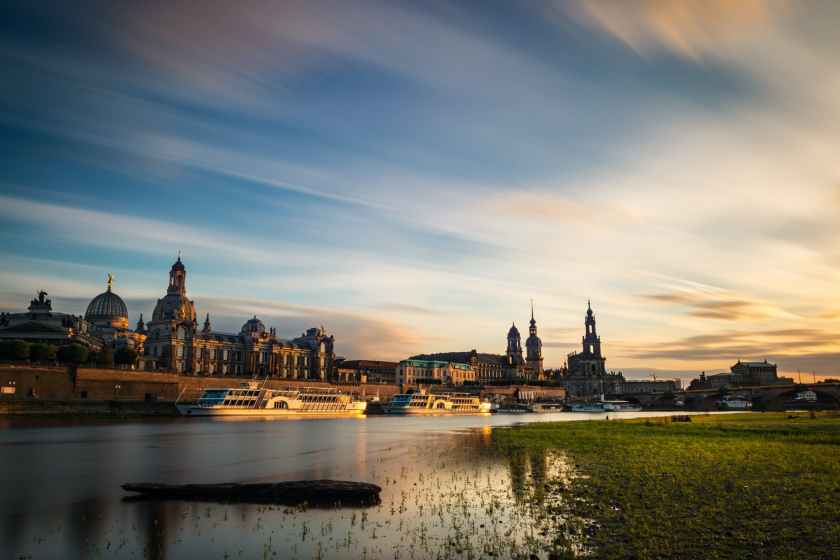
Marienbad

I am in the garden, reading Biomimicry: Innovation Inspired by Nature by Janine Benyus. Biomimicry is about observing nature’s strategies to come up with advanced solutions for human challenges such as food spoilage and shortages, harmful chemicals, and water scarcity. Landing on the opening quote from Václav Havel, I sense synchronicity, here in the Czech Republic. “We must draw our standards from the natural world. We must honor with the humility of the wise the bounds of that natural world and the mystery which lies beyond them, admitting that there is something in the order of being which evidently exceeds all our competence.“ Václav Havel There is a soft murmuring of water from a fountain behind me and a rippling pool in front, as the swimmers float gently from side to side. I settle deeper into the lounge, adjust the sand-colored shade above the chair and continue reading. A honeybee with the unmistakable aura of purpose arrives. He lands on the top edge of the book, so close that I can observe his stubbly knees. Literally, the …

Three Books and an Emerging, Ancient Field

“It is something to be able to paint a particular picture, or to carve a statue, and so to make a few objects beautiful; but it is far more glorious to carve and paint the very atmosphere and medium through which we look, which morally we can do. To affect the quality of the day, that is the highest of arts.” Henry David Thoreau, Walden Three Books and an Emerging, Ancient Field In light of recent developments in artificial intelligence — acknowledging that computer programs can now create art, music, and literature — it is comforting and invigorating to center ourselves in the essence of our humanity, which reaches far deeper than the creation of things… Book 1 Biophilia is the work of evolutionary biologist E.O. Wilson, published in 1984, in which he posited “that our natural affinity for life—biophilia—is the very essence of our humanity and binds us to all other living species.”(1) Book 2  Building on the biophilia hypothesis, social ecology professor Stephen Kellert wrote Building for Life: Designing and Understanding the Human-Nature Connection among other …

Sustainable. But have you ever been to Baden-Württemberg?

What makes a building a green building? Green buildings are designed with sustainability goals and fulfill specific criteria in their construction, maintenance, and life cycle — designated by certifications such as LEED® (Leadership in Energy and Environmental Design) from the U.S. Green Building Council or the DGNB System (Deutsches Gesellschaft für Nachhaltiges Bauen) from the German Sustainable Building Council. For those looking for entry points and a general understanding of how a building is actually a sustainable building though, it helps to consider models and look at details.  “The most sustainable building in the world” Earning a platinum certificate with the highest DGNB certification score achieved thus far, the building known as the Eisbärhaus (Polar Bear House) in Baden-Württemberg, Germany proffers many mindful details. These include: building material choices, such as using recycled concrete in the reinforced concrete-wood hybrid structure; energy efficiency solutions, such as a battery storage system for storing the electricity generated by a photovoltaic system — to use when needed; and a software system, which controls various features in response to current local weather conditions — and …

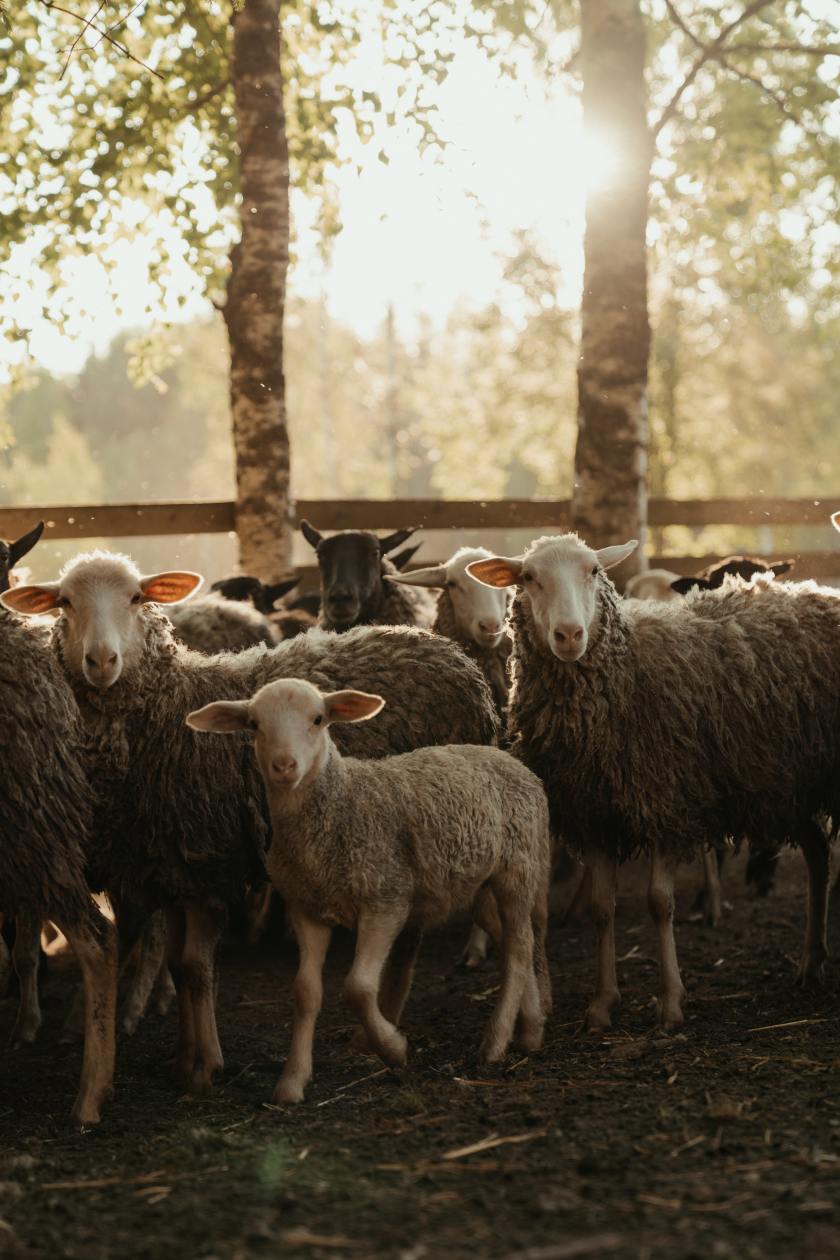
If Ewe Know, Ewe Know

Night and Light and the Half-Light The Gaelic seasonal festival Imbolc takes place halfway in the cycle between the winter solstice and the spring equinox in the northern hemisphere (1 February in the calendar of days).  It is a celebration of the returning of the light, or the returning to the light, depending on one’s perception. (After all, does the sun really ‘rise’ in the east and ‘set’ in the west?) At this time, some will walk ‘round holy wells. If we tune in, we sense the days getting longer. The stretching glow of candles in the home softens the breath in the evening. Sparks. Fresh energy. These spheres ripple into our fields, always present if not always acknowledged, until they reach the graspable routine of 24 hours, in the lived experiences of our circadian rhythms. Responding to the light and the dark, these biological rhythms affect our health by influencing hormone release, body temperature, and rest and digest functions. Our internal circadian clocks need to adjust and readjust to remain in alignment with external time, …

Survival of the Most Adaptable

The German Sustainability Award, sponsored by the Federal Government of Germany, is the most comprehensive environmental award in Europe. Competition is focused in eight categories: architecture, companies, corporate partnerships, design, municipalities, NEA (next economy award), packaging, and research. Research plays a significant role in all areas but merits its own category. A rich potentiality thrives in research and yet it can be daunting, as new ideas are cooled in theoretical frameworks, pooling deep in scientific journals and libraries—instead of focused, like a laser-beam, towards generating new dimensional realities. How do we shift into applied research (pivoting away from what Greta Thunberg recently called the “blah, blah, blah” of politicians’ speeches) and turn the knowledge available to us into solutions and action—baby steps, if that’s what will get us started—immediately? First, we recognize where we are. The leitmotif in the research category this year is adaptation — adaptation to climate change and extreme weather events. In western Europe, as in other regions of the world, the extreme rainfall, flash floods, and intense heatwaves in recent years have made it clear that …

Architectural Quality and Culture: Practically Perfect

Is a utopia the opposite of a dystopia? Dystopia refers to “an imagined state or society in which there is great suffering or injustice, typically one that is totalitarian or post-apocalyptic.” (New Oxford American Dictionary). Utopia calls to mind an ideal place – with all the desirable qualities for a wholesome human society.  Sir Thomas More introduced the term in his 1516 novel Utopia, about a fictional island society. And while that society was located in the south Atlantic Ocean, the word utopia translates from the Greek into English as “no-place”.  So actually, a “utopia” is, in its very code, a promise of perfection with an underlying belief that such a place cannot exist in the real world. Dystopia often calls to mind George Orwell’s Nineteen Eighty-Four. But since that novel was published in 1949, dystopian science fiction stories and films have inundated the mainstream. Think of the stories that can be described as “utopian” – how many can you call to mind? Of course, an emphasis on dystopian patterns must have shaped the way that generations of people in western societies have consciously and unconsciously perceived …