All posts filed under: Books

Beach Holiday in Germany

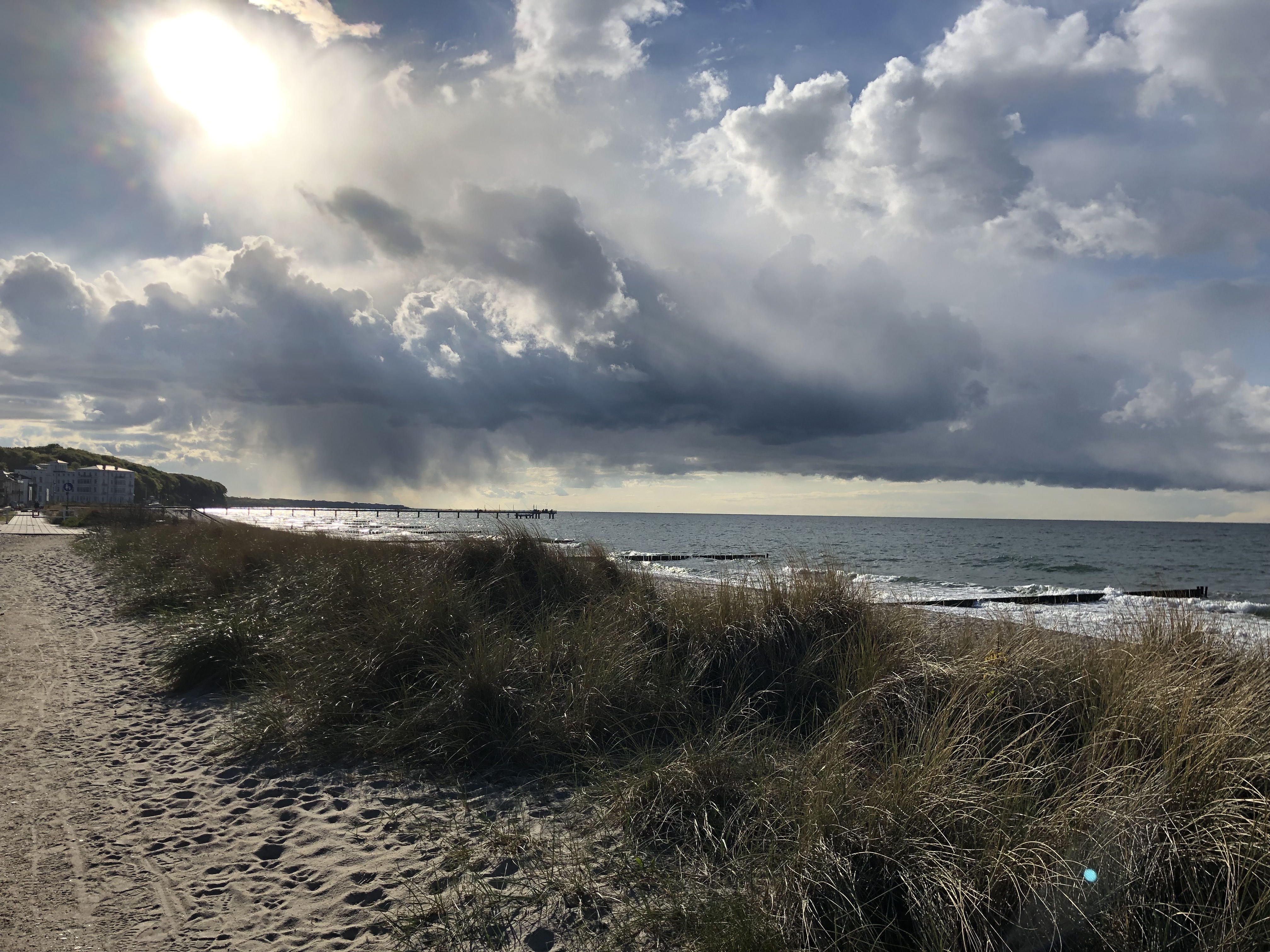
Germany’s fantastic beaches are little-known wonders outside of the country. A friend who grew up in a town on the North Sea coast tells me that many Germans used to fly to Mallorca or mainland Spain, southern France, Italy, the Greek islands, or Turkey for their beach holidays, but in recent years northern European beach towns have been receiving more attention from vacationers. With intense heat waves and wildfires in southern Europe, and expanding environmental consciousness overall, more people have been choosing to travel closer to home — to beaches in Germany and Scandinavia. “My hometown is getting more visitors in the summers now. It’s definitely becoming more popular,” she remarks. These coastal towns and beaches are attractive and serene — ideal for relaxing and energizing holidays. It makes you wonder why they haven’t developed the renown of other beaches in modern times, despite all their natural beauty and charm. “Maybe we’re not as good at marketing,” my friend suggests. There is the marketing issue in some places, to be sure. Some beaches and resorts …

Marienbad

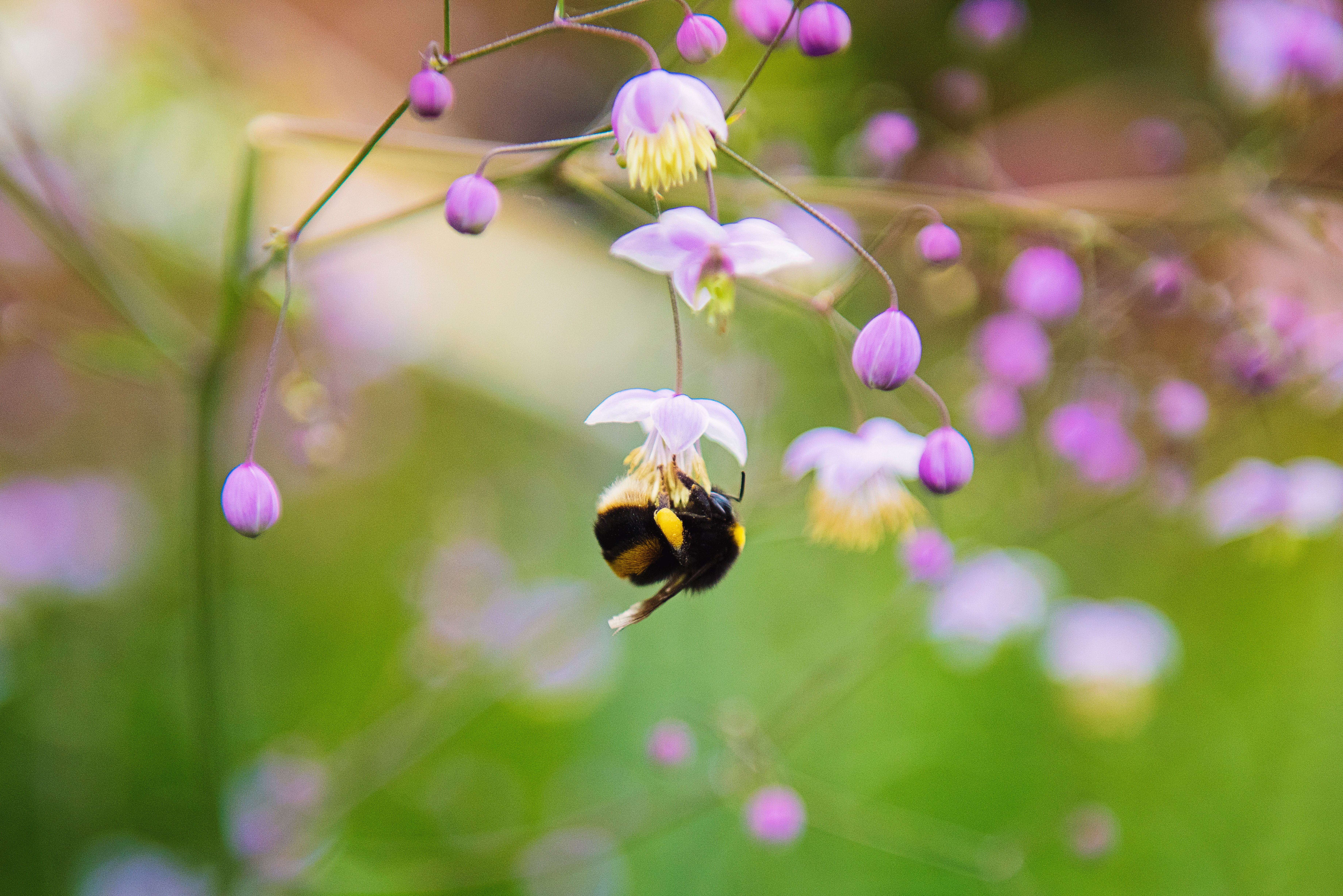
I am in the garden, reading Biomimicry: Innovation Inspired by Nature by Janine Benyus. Biomimicry is about observing nature’s strategies to come up with advanced solutions for human challenges such as food spoilage and shortages, harmful chemicals, and water scarcity. Landing on the opening quote from Václav Havel, I sense synchronicity, here in the Czech Republic. “We must draw our standards from the natural world. We must honor with the humility of the wise the bounds of that natural world and the mystery which lies beyond them, admitting that there is something in the order of being which evidently exceeds all our competence.“ Václav Havel There is a soft murmuring of water from a fountain behind me and a rippling pool in front, as the swimmers float gently from side to side. I settle deeper into the lounge, adjust the sand-colored shade above the chair and continue reading. A honeybee with the unmistakable aura of purpose arrives. He lands on the top edge of the book, so close that I can observe his stubbly knees. Literally, the …

Three Books and an Emerging, Ancient Field

“It is something to be able to paint a particular picture, or to carve a statue, and so to make a few objects beautiful; but it is far more glorious to carve and paint the very atmosphere and medium through which we look, which morally we can do. To affect the quality of the day, that is the highest of arts.” Henry David Thoreau, Walden Three Books and an Emerging, Ancient Field In light of recent developments in artificial intelligence — acknowledging that computer programs can now create art, music, and literature — it is comforting and invigorating to center ourselves in the essence of our humanity, which reaches far deeper than the creation of things… Book 1 Biophilia is the work of evolutionary biologist E.O. Wilson, published in 1984, in which he posited “that our natural affinity for life—biophilia—is the very essence of our humanity and binds us to all other living species.”(1) Book 2  Building on the biophilia hypothesis, social ecology professor Stephen Kellert wrote Building for Life: Designing and Understanding the Human-Nature Connection among other …
Timeless in Tuscany

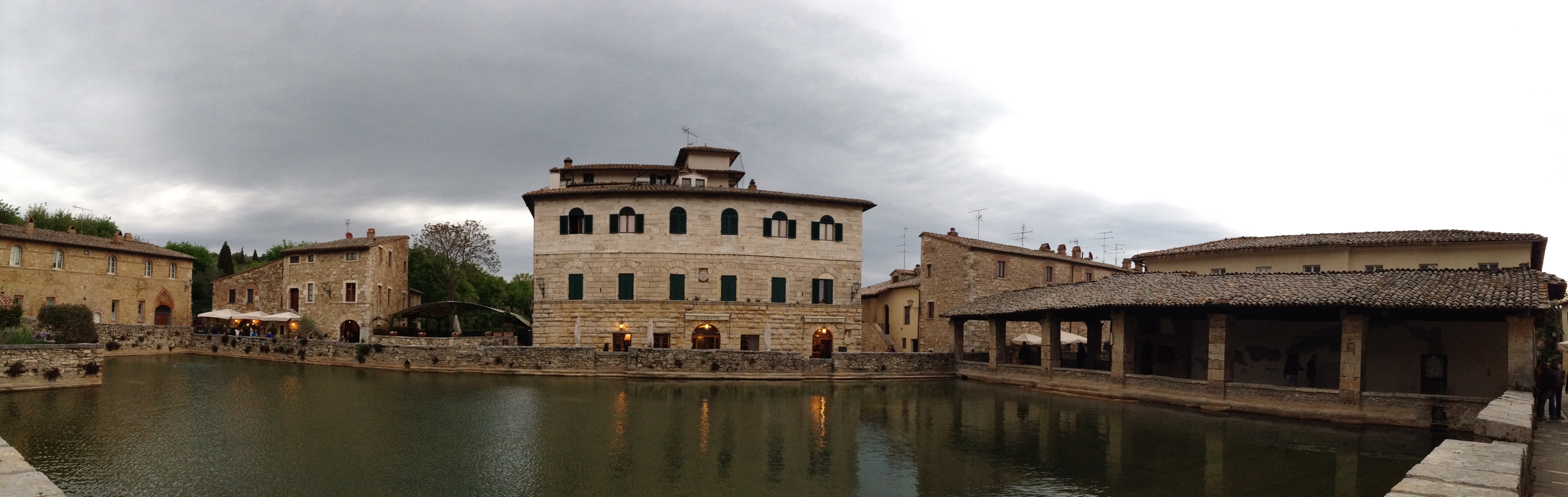
“Sed fugit interea,fugit inreparabile tempus,singular dum capticircumvectamur amore”  Virgil, Georgics It’s 3 o’clock on a Saturday. Saturn-Day, as in Saturn, the great teacher. We’ve arrived. The grandfather clock behind the reception desk stands still, frozen at some previous, unspecified 4 o’clock. Looking closely, I make out the phrase on its face: tempus fugit. “Fugit inreparabile tempus” (It escapes, irretrievable time), wrote the poet Virgil — later expressed in English as: time flies. While time may fly, it can also stop for a spell. Also not flying on this day: our luggage — left behind by the airline along the way. We check in and then go to the center of this piccolo villaggio, hoping for a shop with swimwear. Aha, a shop: Fata Morgana. This is the Italian name of the Fairy Morgana, the sorceress Morgan le Fay in Arthurian legend. Fata Morgana is also the name of a mirage of sorts, visible above the horizon, once believed to be fairy castles conjured up by witchcraft. Now known as “optical phenomena.” They are sometimes seen in the Strait of …

Kneipp*

Water always finds a way Have you ever wondered at how certain books seem to choose you, sliding into your life just when there is a specific longing and space for them, binding with threads of your destiny from the moment you choose them, too?  That’s how the young Sebastian Kneipp must have felt that evening when he returned from the library in Munich. It was at the end of the 1840s and he was trying to get through his university studies while suffering from a lung disease he couldn’t shake off. From a poor family, he had to rely on knowledge flowing to him from various, perhaps unexpected sources. Knowledge discovered. Knowledge earned by intellectual curiosity. And so one day in the library (was he trying to suppress his coughs in the studied silence of the reading room? Did he wander off into the stacks where nobody was, where he could cough into a handkerchief and not bother anybody?) he found a book by one Dr. Johann Siegmund Hahn — written a hundred years …

Architectural Quality and Culture: Practically Perfect

Is a utopia the opposite of a dystopia? Dystopia refers to “an imagined state or society in which there is great suffering or injustice, typically one that is totalitarian or post-apocalyptic.” (New Oxford American Dictionary). Utopia calls to mind an ideal place – with all the desirable qualities for a wholesome human society.  Sir Thomas More introduced the term in his 1516 novel Utopia, about a fictional island society. And while that society was located in the south Atlantic Ocean, the word utopia translates from the Greek into English as “no-place”.  So actually, a “utopia” is, in its very code, a promise of perfection with an underlying belief that such a place cannot exist in the real world. Dystopia often calls to mind George Orwell’s Nineteen Eighty-Four. But since that novel was published in 1949, dystopian science fiction stories and films have inundated the mainstream. Think of the stories that can be described as “utopian” – how many can you call to mind? Of course, an emphasis on dystopian patterns must have shaped the way that generations of people in western societies have consciously and unconsciously perceived …