
Germany’s fantastic beaches are little-known wonders outside of the country. A friend who grew up in a town on the North Sea coast tells me that many Germans used to fly to Mallorca or mainland Spain, southern France, Italy, the Greek islands, or Turkey for their beach holidays, but in recent years northern European beach towns have been receiving more attention from vacationers. With intense heat waves and wildfires in southern Europe, and expanding environmental consciousness overall, more people have been choosing to travel closer to home — to beaches in Germany and Scandinavia. “My hometown is getting more visitors in the summers now. It’s definitely becoming more popular,” she remarks.
These coastal towns and beaches are attractive and serene — ideal for relaxing and energizing holidays. It makes you wonder why they haven’t developed the renown of other beaches in modern times, despite all their natural beauty and charm. “Maybe we’re not as good at marketing,” my friend suggests.
There is the marketing issue in some places, to be sure. Some beaches and resorts lean on comparisons to other places: Föhr is described as the “Frisian Caribbean”, Heiligendamm on the Baltic Sea coast welcomes visitors to the “German Hamptons”, the island of Sylt is like “Martha’s Vineyard — but more beautiful”. And while there may be nuggets of truth in these comparisons, the reality is that the beaches and seaside towns in Germany have their own unique combination of setting, character, and vibe. For real access, we should prefer other analogies, rooted in the ambience of German beaches.
Things that are also places that give us an experience:
Behold the German beach chair — der Strandkorb.

More than a chair, it was engineered for humans in harmony with local nature. These distinctive wicker-canvas-wood pieces of furniture have hoods that shield you from strong winds and swirling sands, while still allowing all the healthy negative ions in the sea air to be deeply breathed in. The chair can have a footrest and other features, but the basic model was simply designed for protection and reinvigoration. Tucked away in your private German beach chair, you are in a place within a place. You’re getting your strength back.
Things that are also experiences that give us a sense of place:
Some things are also experiences that give us a sense of place. For example, a scrupulously-designed regional crime novel – the Regiokrimi.
According to Thomas Kniesche, a professor of German studies at Brown University, there are more than 3,000 crime novels published in Germany every year. And just as the immensely popular TV series Tatort has continued to thrive filming episodes in various regions of the country — the most popular literary sub-genre in Germany is the regional crime novel.
This speaks to ongoing shadow work and meaning-making. Doing one’s own shadow work instead of projecting onto other people can be demanding and challenging; it is not for the faint of heart. It is honest work, and honestly work — from which one might need to take a break sometimes — to relax and project shadow safely in art and literature.
...In the end you have no alternative but to take the conflicts on yourself by ceasing to identify now with one side and now with the other. You become what happens in the middle. Then you are in the flow, and for this you need the high heart of the warrior.
Carl Jung
For the ambience of northern Germany, there are notably the novels* of Eva Almstädt, Anna Johannsen, and Klaus-Peter Wolf to dive into during a summer beach holiday – safe and sound in a Strandkorb, naturally.

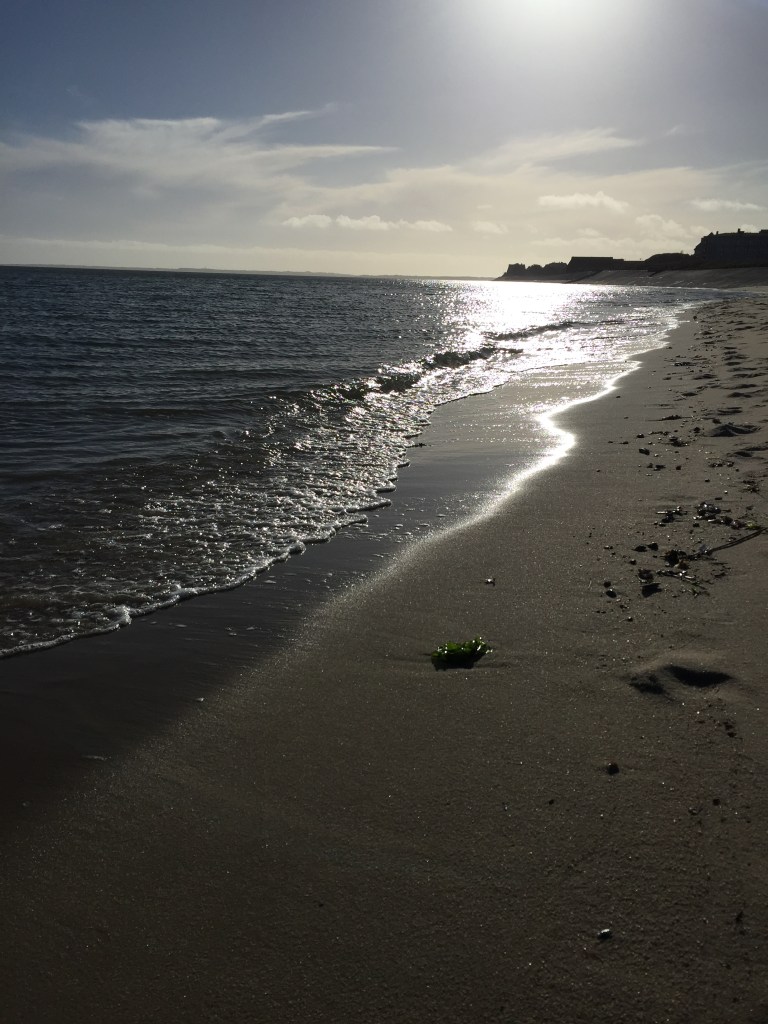
Destinations
The coastline of Germany stretches from the North Sea near Denmark to the Baltic Sea, for more than 2,250 kilometers (1,400 miles). In addition to sandy beaches, resorts, and seaside towns, there are also many islands close to the coastline. Here are some recommended destinations for a beach holiday in Germany.
Warnemünde
(Baltic Sea)
The town of Warnemünde and its beach are only about two and a half hours by car from Berlin. It is reportedly here that the Strandkorb got its start, in the late 19th century. The long white-sand beach gets lively in the high season. There is also a promenade, a light house, and the historic town center to explore. Amber, a yellow-orange fossilized resin, is found on the southern shores of the Baltic Sea and has been used in jewelry since ancient times; there are a number of small shops that sell beautiful amber pieces. The Marina Ostsee harbor nearby offers yacht berths and charters, sailing, surfing, and a diving school.
Also highly recommended for a focus on spacious nature and art: about an hour northeast of Warnemünde is the delightful, art-infused Ahrenshoop. The 13-kilometer (8-mile) long beach Weststrand, and the 5-kilometer (approx. 3-mile) long white-sand beach Nordstrand Prerow (and a beautiful dog-friendly beach, too) are also on the stretch of landscape known as Fischland-Darß-Zingst.
Usedom
(Baltic Sea)
Usedom — the “Sunny Island” — has a 42-kilometer (26-mile) stretch of sandy beaches along its northern coast, with a trio of elegant seaside towns: Ahlbeck, Heringsdorf, and Bansin — which are also connected with a grand promenade. There are many interesting buildings, hotels and villas in the Bäderarchitektur style to admire while on a stroll — hearkening back to the imperial-era seaside resort towns and wellness culture.
Rügen
(Baltic Sea)
Germany’s largest island Rügen is connected by bridge to the mainland, and it is also where the Deutsche Alleenstraße (German Boulevard) starts. This route is about 2,900 kilometers (1,800 miles) long, with “tunnels” formed by tree branches overhead; it connects east and west — and winds through the country, finally reaching Lake Constance, known in Germany as Bodensee.
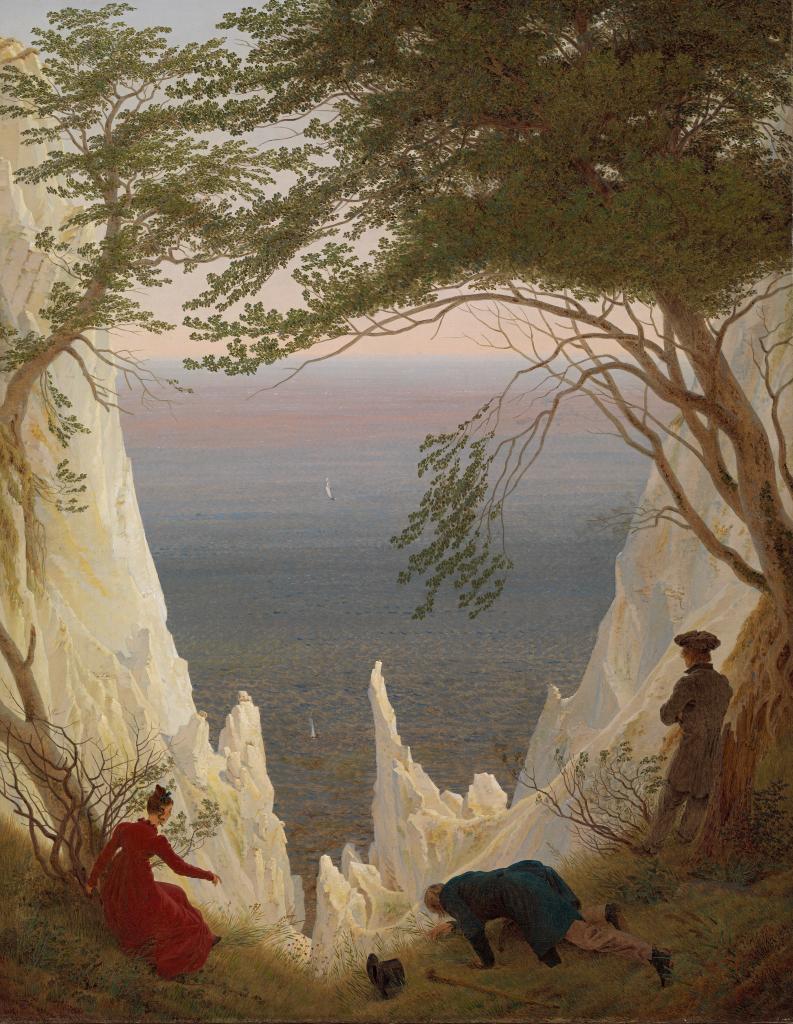
The sandy sea shores on the island stretch for 61 kilometers (38 miles), where you will find the charming seaside towns of Binz and Sellin. The Strandkörbe (beach chairs) have their place on the golden-hued beaches here — while the Königsstuhl, (King’s Chair) is on the white chalk cliffs nearby, in the Jasmund National Park.
Also highly recommended: Hiddensee, known as the “island behind the island”, which can be accessed by ferry from the town of Schaprode on Rügen. Automobiles have to be left behind in a parking lot in Schaprode; Hiddensee is blissfully auto-free. When the last ferry of the day leaves the island, Hiddensee shifts to an exceptionally peaceful and slow-paced feel.
And if that sounds ideal, other recommended auto-free German islands that offer a more secluded nature and wellness-focused experience include the East Frisian islands of Juist and Langeoog in the Wattenmeer zone of the North Sea.
Sylt
(North Sea)
The largest North Frisian island, Sylt is situated near Denmark and has about 40 kilometers (25 miles) of sandy beaches. You can design your stay on Sylt so that it feels like a serene and secluded retreat from the world – perhaps choosing to stay in a traditional thatched-roof cottage or at a quiet, subtle upscale spa resort in the town of Keitum. But then there’s also the splashy Sylt, the flashy ostentatious side of Sylt; the beachside bars and nightlife, upscale shopping, superb seafood, fine dining.
Also highly recommended, near Sylt in the North Sea: the quiet and beautiful beaches with a nature reserve and otherworldly dune landscape on the island of Amrum.
⚓️
So, which beach is the most beautiful? Of course that designation is in the eye of the beholder. With an approach that seeks to tune into an authentic ambience, our experiences can have more context and meaning. And that makes for a beach holiday to enjoy and cherish.❂
The writer does not work for, consult, own shares in, or receive funding from any company or organization mentioned in this article.
References
Feature photo from Heiligendamm seaside resort, Bad Doberan by M.J. Heinrich
Deutsche Alleenstraße (German Boulevard, Rügen to Bodensee route)
Photograph of Strandkörbe by LaRusso, Hamburg-based music producer Mark Brückner
Thomas Kniesche, “Germany’s Love Affair with Crime Fiction,” – Foreign Policy, October 2021.
*German Krimi authors and regional crime novels:
- Eva Almstädt | Start with Kalter Grund (2004), the first book in her Pia Korittki series — or Am dunklen Wasser (2022), the first book of the Akte Nordsee series.
- Anna Johannsen | Perhaps start with: Der Tote im Strandkorb (2017), the first book in her series, Die Inselkommissarin-Reihe — or her book: Hinter der Dunkleheit (2022), which started a new series.
- Klaus-Peter Wolf | Start with Ostfriesenkiller (2007), his first book in the series, Ann Kathrin Klaasen-Reihe.
Chalk Cliffs at Rügen, (Kreidefelsen auf Rügen) oil on canvas by Caspar David Friedrich (1818-1819). Original painting at the Kunst Museum Winterthur Reinhart am Stadtgarten, Zürich. Exhibition in 2023: Caspar David Friedrich und die Vorboten der Romantik (26 August – 19 November 2023).
 Anahita in Love
Fabulous article … I would never have thought about traveling to these areas but you certainly piqued my interest…
LikeLiked by 1 person